Hello, and welcome to the Plumas County
"Bloom Blog" and waterfalls viewing page. Our goal is to keep
wildflower/waterfall enthusiasts informed about where specific
wildflowers and waterfalls can be found from February through July.
Please send us
up to date information with locations and/or
photos. Let us know if our plant identification is
incorrect.
|
August 10, 2009
Bloom Blog Signing Off
Well, this has been a great flower season here is Plumas
County, but now with summer winding down and fall looming
before us, we are officially closing our bloom blog blog
out. Thank you for all the fabulous submissions! Naturalist
and Educational Specialist, Joe Willis has been an amazing
contributor to our blog this year. We are really looking
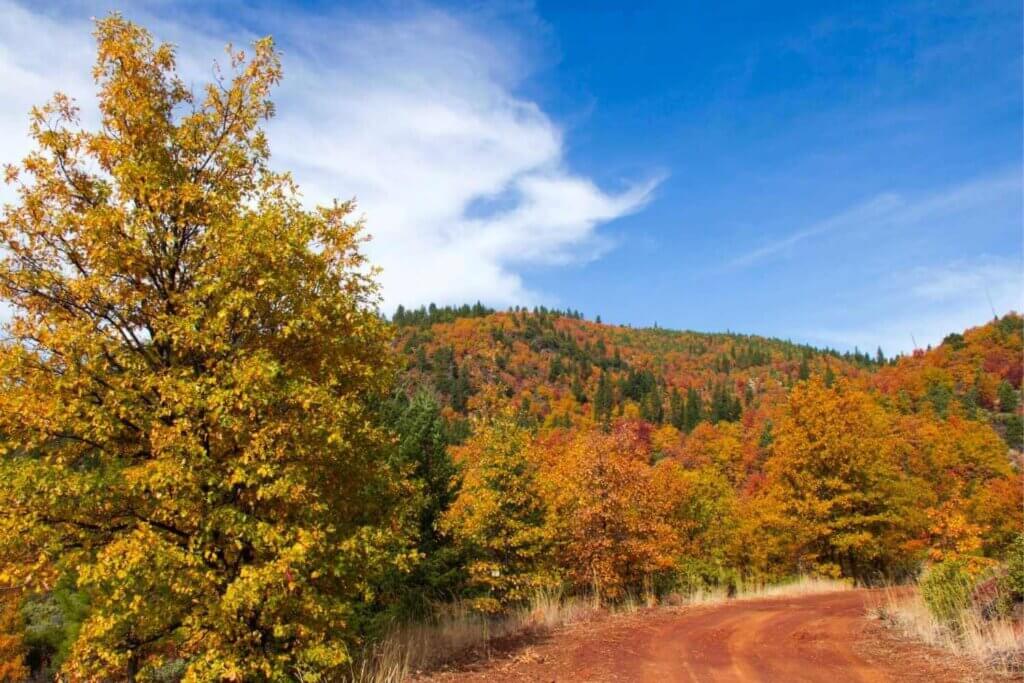
forward to our Awesome Autumn Blog that is going to
begin as soon as those leaves begin to change, so please
stay tuned!!!
July 28, 2009
Joe Willis Blogs:
A
month ago I slipped on a rock and damaged my leg and my
camera. Last week it was an encounter with a rattlesnake.
This past Sunday, I got too close to a yellow-jacket nest
and got stung about 6 times before escaping the mob. So, as
we enter the hottest part of summer and the peak of
yellow-jacket season, I'd suggest that wildflower
aficionados stay on the trails or roadsides. Don't step in
places where you can't see the ground - like I did three
times recently with bad results.
Today,
I had a great time by the ditches across from the Quincy
High tennis courts. Many types of thistles, which
along with the tansy, chicory and
bachelor's buttons are in the sunflower family,
or more recently called the aster family,
Asteraceae. The
bees there were nearly all honey bees and bumblebees which
are not particularly aggressive. But those ground-dwelling
yellow jackets can kill you if a whole mob gets to
you at once. That's a rare occurrence, probably because
most people stick to the trails or stay home.
As
much as these thistles can be a nuisance when you're trying
to grow lettuce or tulips, they are quite beautiful. The
star thistle, which is driving lots of ranchers and
farmers nuts, is in the same genus as the bachelor's
buttons, Centaurea.
The
"bug" on the chicory flower enclosed is a hover fly,
a bee mimic which doesn't bite or sting. They have taught
helicopter designers a lot about hovering. If you want to
do some safer wildflower watching and get a final taste of
spring, I'd suggest getting above 6000' on any of our 7000'+
mountains or in the Lakes Basin. Still lots of lilies
blooming, and monks hood, c
olumbine,
larkspur and buttercups.
Afterthought: the close-up of Spanish clover, a
member of the pea family like lots of our roadside wild
peas, vetches and lupines, is a non-descript grayish weed
unless viewed up close. The blossoms are quite pretty but
only about 1/3" wide.
July 20, 2009
Joe Willis Blogs:
Bib and I had quite an adventure at Snake Lake over the
weekend. Decided to circle the lake, clockwise. Along the
western shore there were great patches of rein orchid, a
tall white spike of flowers that is easily mistaken for
death camas and other lilies, but viewed up close it is
obvious that it's an orchid.
On
the north end of the lake where the water trickles in there
were great bogs filled with leopard lilies, blue camas, corn
lily, spirea, and goldenrod. There was also lots of smelly
black mud trying to suck our shoes off! Paradise for a
microbiologist.
Then
came the pine forest along the eastern shore. While
bushwhacking through the dark pine forest, climbing over
windfalls and dodging thistles, Bib yelled "Stop!
Rattlesnake!" I stopped and asked, " Where?" She pointed,
and I was one step shy of stepping on a Western Rattler,
Crotalus viridis.
It was stretched out and moving slowly away from me. It
didn't even rattle, probably because it was still cool.
Anyway, I got a few pictures, rather blurry due to the slow
shutter speed - and maybe I was a little nervous.
We
were relieved to pick up the trail again by the big beaver
hogan, and be able to see where we were putting our
footsteps for the rest of the hike. Lots of great
vegetation along the west shore - Cascara buckthorn with
lots of berries, dogwood, willows, cow parsnip,
cat-o-nine-tails, and much more. Great amount of insect
activity, too, for those with patience and/or telephotos
lenses. I've always preferred using the standard lens and
patience and getting really close to the insects or just
waiting for them to land on a flower I've focused on.
Exciting trip. It would be good to develop a trail along
the west shore though.
July 14, 2009
Joe Willis Blogs:
Following
a tip from Judy Buck, I drove from Quincy to Williams Loop,
on up to Argentine Peak, through Brady's Camp
to the Mt. Hough Road and from there descended to Quincy
Junction Road. The spectacular Blazing Star was on
the grade leading up to Williams Loop.
On
the way up to Argentine I saw lots of Indian Paintbrush
and Pennyroyal, then the real show began around
Brady's Camp. Great meadows above 7,000' had lots of
Meadow Larkspur, Rein Orchid, White Lupine,
Corn Lily, Shasta Clover, and a great variety of
butterflies and beetles doing the pollinating.
Along
the road from Argentine to Hough there were several great
patches of Snow Plant, and every little creek
crossing had lots of Leopard Lilies and Monk's
Hood. The road is mostly very smooth, and 4WD is never
needed. This is a highly recommended half-day, or bring a
lunch and picnic at Brady's Camp. Most of these flowers
should be around for several more weeks. Since I was at
7,000, most of the same flowers should be out in the
Lakes Basin and near the tops of other mountains like
Claremont Mountain, Dixie Mountain, and Mills
Peak, all of which have easily passable roads.
July 1, 2009
Joe Willis Blogs:
My
first flower walk for July was along the Mills Creek
Trail along the east shore of Buck's Lake. A
great place for wildflowers as there are several dramatic
changes of habitat from wet, shady creek beds and their
surrounding swamps to open dry slopes.
All
the photos I took today are labeled and the only whose ID
I'm not confident of is the bird, a spotted sandpiper.
I'm not a bird expert and would welcome a correction if
warranted.
Saw lots of other flowers that have already appeared here
this season like monk's hood, columbine, leopard
lilies, buckwheat, and many more. Took over 100 photos and
will definitely go back there again soon, although my next
trip will probably be to the Lakes Basin.
June 30, 2009
Joe Willis Blogs:
Got
to drive to the north county recently and photographed a few
new things. The Elk Thistle, a very low-lying one, was on
Hwy 36 about 2 miles west of the Clear Creek turnoff.

The Tansy-leaf Suncup was also in that area; it's in the
Evening Primrose family, as is Hooker's Evening Primrose
which I found this morning along Lee Road near the
fairgrounds.

The
White Stickseed was near the county line just west of Clear
Creek; it's in the borage family and a close relative of
Forget-Me-Nots. Finally, I can't get enough of the Showy
Milkweed - it not only smells like fresh peaches, but it
attracts a great variety of interesting insects.
This
week I got a Monarch Butterfly caterpillar and a ladybug.
My favorite milkweed spots are along Lee Road where a lot of
interesting stuff will probably fall to the weed eaters in
time for High Sierra where the flower children will replace
the flowers.
June 29, 2009
Joe Willis Blogs:
Lots of good stuff blooming in and around Quincy. The
Prince's Pine is in the heath
family and is blooming in
the shady woods on north-facing slopes like Claremont
Mountain.
Ninebark
is the correct name for a plant I sent last week and
tentatively named it Ocean Spray, but I was corrected
by a Bloom Blog watcher from Berkeley. Thanks!
The
Indian Hemp I found at the roadside near Oakland
Feather River Camp while I was leading a small group on
a guided flower walk. It's the taller relative of spreading
dogbane, posted earlier, and both are close relatives of the
milkweeds. This one was in a group of 4' tall plants easily
confused, from a distance, with showy milkweed in the same
spot.
Thyme-leaved
Speedwell is one of at least two five species of
Veronica found
around here and is in the figwort family.
I
was delighted to find Toadflax along Quincy
Junction Road. When I was kid back East, we used to
call this one Butter and Eggs, but in the Sierra that name
is given to a different plant, also posted here earlier.
It, too, is in the figwort family, along with Paintbrush and
Penstemon.
Last, Diamond Clarkia,
Clarkia rhomboidea,
is an
elegant little flower, not as common as its relative,
Farewell to Spring, also a
Clarkia. I found these in and around Oakland Camp
and also on the hill between Crescent Mills and
Greenville.
June 26, 2009
Kathy Kobashi of San Jose, writes to us:
These
pictures were taken by the Spanish Creek. I believe I have
the names right but feel free to correct them if not.
I was pleasantly surprised to see so many
beautiful wildflowers, in fact the Showy Milkweed buds were
just opening last week.
Ladybug on Oxeye Daisy


Checker
Mallow

Showy Milkweed

Yarrow and Sticky
Cinquefoil

Dandelion

Crimson Columbine

Sandhill Crane and Baby
June 23, 2009
Joe Willis Blogs:
The
great New York Yankee catcher, Yogi Berra, once said, "You
can see a lot if you look." I found that to be true driving
the road to and through Oakland Camp on Saturday. While
driving along, the most obvious scenario was grasses and
some wildflower species turning brown and many species gone
to seed. However, each time I say any color at all besides
green, say a spot of yellow, blue or red, I'd stop and walk
around with my camera.
In
an hour and a half, I photographed around 90 species of
flowers blooming that I would never have seen from the car.
Five samples are attached. The one ID I'm unsure of is
Ocean Spray. It's a prominent shrub with it's great flower
clusters attracting lots of butterflies, but I haven't
noticed it in years' past, so if anyone can confirm the ID,
that
would
be appreciated.
The Scarlet Gilia and Collomia are both in the phlox
family and were found together at the roadside just beyond
the camp. Sulfur pea is one of many species of wild pea and
vetch now blooming.

And Spirea is blooming close to the Creek. It can be
found all the way up to around 8000 later in the season. In
the creek itself were some huge patches of Indian Rhubarb,
past blooming, but the healthy leaves portend a great color
show for the Leaf Peeper season next fall.
June 18, 2009
Joe Willis Blogs:
Coming
toward Quincy from the Greenville Y, I saw a train coming
from the canyon, so I decided to stop by the Keddie Y and
wait for it. Nice place to look at wildflowers in the
"roadside weeds" category while waiting for trains.
So,
I photographed the vetch, a type of wild pea, pennyroyal, a
mint, and spotted coral root, an orchid, then I got a lot of
shots of the very long train - I'd say close to two miles
long pulled by five engines.

Then,
when the train was out of sight, a vehicle came skidding
into the gravelly turn-out and camera laden people
carelessly crossed the road shouting "did we miss it?"
Turns out they had consulted RR websites announcing
scheduled train trips through this area, which lots of RR
buffs do. But, their timing was off. The train was gone.
While this is a very interesting spot to photograph trains
and wildflowers, please be warned - it's by a blind curve
and big trucks travelling toward Quincy cannot safely stop
for you. I recommend crossing the road a couple hundred
yards toward Keddie, then staying behind the guardrails for
your entire photo excursion. It was fun, though. The train
buffs were headed east, but the train was headed north.
There will be another time!
June 16, 2009:
Joe Willis Blogs:
Sunday:
Hard to top Saturday's trip to the botanical garden, but
Snake Lake never disappoints. While mountain dogwood has
faded in most areas, the American dogwood, a smaller
shrub, is still in full bloom and plentiful around the dam.
Bachelor's
button, a beautiful roadside weed, grows particularly
big in the wet areas around the lake. Same genus as the
less popular Star thistle.
The
trail along the west shore of the lake has lots of cow
parsnip blooming. These are easily confused with the
poison hemlock and other umbelliferous plants, although the
latter are usually found in more open, drier areas. Both
can be found along the nature trail at FRC.
The
columbine aren't as plentiful as last year, but are blooming
and attracting hummingbirds. The Sierra onion were
plentiful but camouflaged in the underbrush. Found them
first by aroma.
There
were several patches of Dogbane along the road to the
lake. It's a milkweed relative. There are some some huge
patches of it in the ditch behind Plumas Cafe. Blossoms
quite beautiful when you catch them at the right time.
Last, I find myself continuing to photograph the showy
milkweed, even though I have around 50 shots at this point.
It's a spectacular-looking flower and it attracts lots of
interesting insects. Worth the wait. The several patches
along Lee Road, if they survive the current construction
project, are often occupied by Monarch butterflies and the
spectacular red mikweed beetle. If you bring your telephoto
lens and some patience, the dam at Snake Lake is a great
place to wait for frogs, dragon flies, and damsel flies.
But this is a wildflower blog, so I'll keep the bug photos
to a minimum.
June 15, 2009
Joe Willis Blogs:
Had
a great walk through the "botanical garden" Saturday and met
a nice couple who came down from Vancouver to see our famous
pitcher plants. The leaves of the pitcher plants are
wilting and browning, but there are still plenty of
beautiful
blooms.
Another category of carnivorous plants the area is
known for are the sundews. We saw a number of insects
get trapped in just a few minutes.

I saw a new lily for the first time, bog
asphodel. Only one bloom on this one, but I plan to go
back to look for more. Saw lots of yarrow (sunflower
family) as usual, but what at first seemed like a mutant
yellow flower turned out to be the beautiful crab spider.
Another
beautiful lily that was abundant Saturday is the death
camas.

A beautiful shrub in the heath family is the Labrador
tea.
Western azalea (a rhododendron) was also blooming and
cast a wonderful aroma over the area.
The small but beautiful Macloskey's violet was
plentiful
but
often hidden under the azaleas and other shrubs. Last, the
yellow-eyed grass, a member of the Iris family. A wonderful
garden, but wear waterproof shoes.
June 9, 2009
Joe Willis Blogs:
Just
got my camera back from the repair shop Saturday and have
had two wonderful days of photography.
The
Bush Monkeyflower, Self-heal, and Spice Bush
were seen in the Feather River Canyon in a shady spot about
a mile west of the Rest Area below the tunnels.
The
Thimbleberry, Red Columbine, and Lemmon's
Wild Ginger were found in Boyle Ravine above
Quincy Elementary. The Sapsucker visits my front yard on
Boyle Street daily.
I
've
tried for three years to get good pictures of the Wild
Ginger. It's hard because the large leaves totally
cover the flowers which grow close to the ground and hang
downward. One has to pick up one leaf at a time in the
right season in order to spot the flowers. Then one has to
more or less lie down in the mud to get good photos. That
is, if you want the photos to be "natural."
To
illustrate this, I've included a shot of a patch of leaves
where no flowers are visible, and a close-up of a flower.
To
get the latter, I had to hold some leaves out of the way.
The recent rains are going to prolong the wildflower season
at our elevation. Exciting. Joe
June 4, 2009
Joe Willis Blogs:
What
a difference a few days of alternating sun and rain makes.
Along Hwys 70 and 89 from Quincy to Greenville, the thistles
are blooming. Several species hard to distinguish,
especially at 55 mph!
Also,
the showy milkweed, not blooming in the photo o
n
Monday's posting, are now blooming and attracting monarch
butterflies.
Along roadsides, in cracks in sidewalks, and in my front
yard are pineapple weed. And, in the shady forest on the
north-facing slopes of Claremont is the spotted coral root
which is actually an orchid. In the same area last year I
saw striped coral root. Very similar, except when viewed
close up. One's flowers have spots and the others have
stripes.
June 3, 2009
Dennis Olivariz of Grass Valley, wrote to us about his trip to
Plumas County:
"I just returned from a quick road trip through Plumas
County. We took a quick side trip through Butterfly
Valley and made an attempt to find the Botanical area.
We found it and the Pitcher plant was in full bloom
May 30, 2009. We also observed some other small plants that
resembled Venus fly trap--very sticky--small--maybe 10 to 15
mm tall with multiple red and green heads. Take Bog Road
which doubles back off the Butterfly Valley to Twain road.
Be prepared for mosquito's around the bogs both above and
below the road. Bog Road is graveled, the Butterfly Valley
to Twain is dirt but passable."
Dennis's
account inspired us at The Plumas County Visitors Bureau to
get out to Butterfly Valley and get a glimpse at this
gorgeous and rare botanical garden. As we drove up the
Butterfly Valley Road, the first flower we saw was a Wild
Iris. There was a whole hillside of them blooming.
The
weather had just finished with a quick downpour, so
everything in the area was fresh and the flowers seemed
vibrant and happy as the sun began to peek out from behind
the clouds. The next flowers that we came across were the
wild roses. The were in full bloom and smelled extremely
fragrant.
We
saw some kind of Azalea that was white, we are not sure of
the exact ID of these flowers.
Then
there were the Carnivorous Pitcher Plants, in full bloom.
They were flourishing and there were several different
patches of them. We have never seen them in such abundance,
usually
when
we get out there it is a little too early or a little too
late. We really got lucky to catch these plants in all their
glory.
We also saw some Blue Camus, Wild ginger and plenty of
Dogwood.

Blue Camas Among The Pitcher Plant

Wild Ginger with Mushrooms

Dogwood
June 1, 2009
Joe Willis Blogs:
A
wonderful wildflower season is under way at our elevation,
3,500' plus or minus a few hundred. My wife and I hiked up
on Claremont Mountain via Boyle Ravine and saw lots of
Pretty Face, a lily. These will be blooming at higher
elevations in the coming weeks. I found them in the Lakes
Basin in July last summer.
Daisies
are plentiful in fields and roadsides all around our
area. I photographed these by the school in East Quincy,
but see lots along 89 on the way to Greenville.
Yellow
salsify, also known as goat's beard, is blooming in lots
of places around Quincy. This one is at the edge of my
driveway, but there are lots in the fields around the Plumas
Animal Shelter.
Two
that are easily confused unless you take a close look are
chicory (right) and bachelors buttons (below).
Both are pretty and plentiful along 70 and 89 at our
elevation.
Just
north of the Greenville Y is a turnoff my son and I
call "the milkweed place." Three species are found there
within a few hundred yards of each other.
The
showy milkweed is not quite blooming, but even the
buds are beautiful and the milkweed beetles they attract are
especially beautiful.
The
purple, or heartleaf milkweed is in full bloom here
and also along the road to Oakland's Feather River Camp.
Last,
in
the rocks alongside Indian Creek one can find the
narrow-leaf milkweed, this one being visited by a
beautiful butterfly.
Last,
a beautiful member of the morning glory family,
called bindweed by those who don't like it and
orchard morning glory by those who do. This one will be
with us all summer and from the lower canyon to at least
7000 feet. Along 89 between the Greenville Y and the
Taylorsville T are great stands of deerbrush, some totally
covered with buches of white flowers, and lots of blue
lupines along the roadside. These have been pictured here
before, but they are particularly plentiful at this time. I
see more and more nice photos are being sent in by visitors
to the county. Great tradition, and a great way to meet
fellow nature photographers.